Legal Status
Who We Are
I.D.E.A.S. is a minority owned research institution rooted in digital equity, attention science, and sociological research, built to create real opportunities for serious students and emerging researchers. We are based in Florida, but our work and our classrooms are intentionally designed for students and collaborators across the world, not just those who live in the state.
The Institute for Digital Equity and Attention Science (I.D.E.A.S.) is formally registered in Florida as a nonprofit research institute, and is also recognized as a small charitable organization, reflecting our commitment to public benefit, access, and accountability. Our 501(c)(3) status is currently pending, and our registration with SAM.gov is in progress, so that we can expand our capacity to partner with institutions, secure funding, and support more students without compromising our independence or mission. As a minority owned institution, we are intentional about who we serve, how we build our programs, and how we measure impact, and we treat digital equity as both a research focus and an operational standard.
We do not see I.D.E.A.S. as a local program, we see it as a global research environment. Students, working professionals, and independent learners from any country can apply to study, contribute to active projects, and build real research experience inside our frameworks and systems, whether or not they are physically in Florida. Our goal is to make rigorous, structured research training available to people who have historically been excluded from these spaces, while holding everyone to a high standard of work, integrity, and care.
If you share an interest in digital systems, sociology, attention, or governance, and you want to do more than observe from the outside, I.D.E.A.S. was built for you.
Why I.D.E.A.S. Was Founded
Building the Missing Infrastructure
The Institute for Digital Equity and Attention Science (I.D.E.A.S.), founded by Delante Clark, was established to address a fundamental structural gap in the modern world. Digital systems now influence attention, behavior, and access to information at a global scale, yet there are no standardized, independent systems capable of measuring or evaluating their impact.
Existing frameworks focus on content moderation, platform policy, or privacy, but they do not provide measurable systems for understanding how attention is structured, distributed, and influenced across populations. There is no consistent method for identifying exposure risk, cognitive demand, or systemic imbalance within digital environments.
I.D.E.A.S. was created to build that missing infrastructure — supporting the development, application, and advancement of systems that make digital environments measurable, comparable, and governable.


By the Numbers
I.D.E.A.S. In Action
—
Current Researchers
—
College Researchers
—
High School Researchers
—
Cities & States Represented
—
Average Course Grade
—
Papers & Reports Published
Founder
Delante Clark
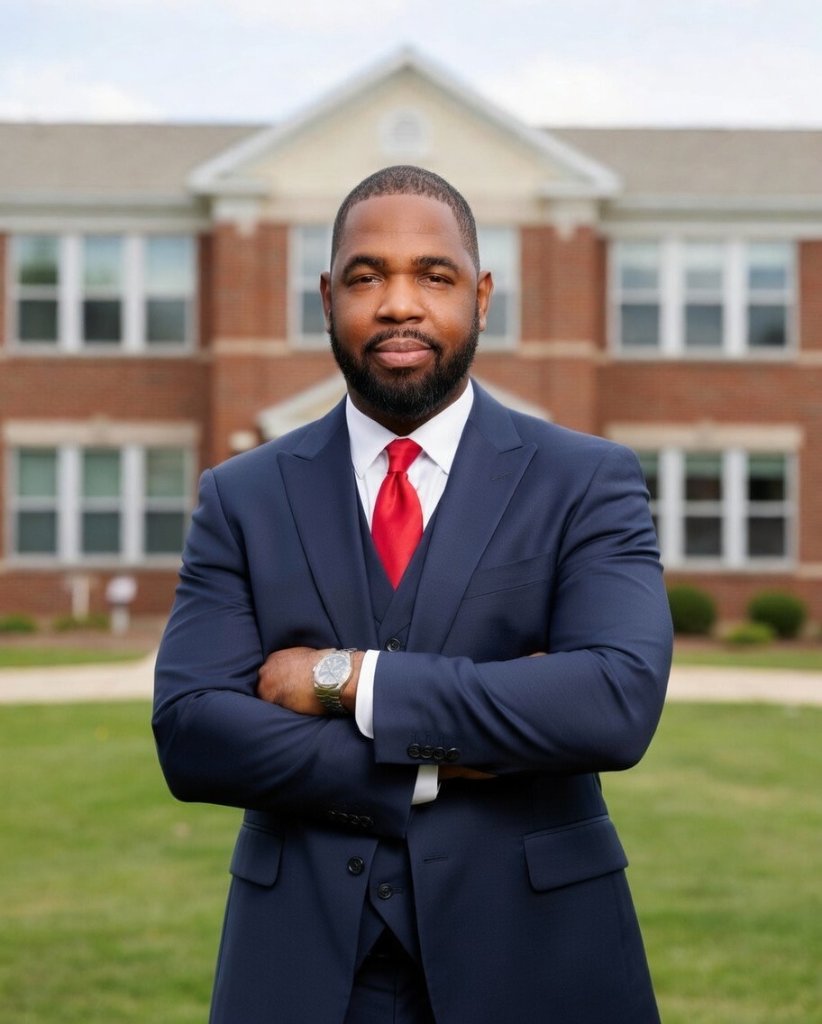
Delante Clark holds an AA from Valenica College, a BS in Political Science from Florida A&M University and a MPA from the University of Central Florida, where is now serves as an adjunct lecturer He created the Institute for Digital Equity and Attention Science, I.D.E.A.S., to extend his research beyond theory and into systems that measure how digital environments shape attention, behavior, and real outcomes. The work he has developed, including ASM, C.A.S., and SIA, reflects a focused effort to bring structure and accountability to spaces where harm is often overlooked or unmeasured.
I.D.E.A.S. was also created to open access. Clark saw that too many students wanted to build real research skills but were limited by a lack of opportunity, guidance, or clear entry points into serious work, and he designed I.D.E.A.S. as a space where underrepresented students and emerging researchers can engage directly, develop their abilities, and contribute to research that has clear purpose and impact.
Through I.D.E.A.S., Clark brings this work into practice by creating an environment where research is not just studied, but actively built, tested, and applied to real systems. This institute functions as an extension of his academic and public scholarship, not a separate track, with the goal of building something that is rigorous, accessible, and capable of driving real change in how institutions understand and manage attention, equity, and governance.
All research, platform development, publications, and institutional operations conducted through the Institute for Digital Equity and Attention Science (I.D.E.A.S.) have been independently self funded by founder and researcher Delante Clark, without external institutional sponsorship, corporate backing, or major grant support.
Our Foundation
Mission & Scope
Mission
The mission of the Institute for Digital Equity and Attention Science is to build and maintain the systems needed to make digital environments measurable, comparable, and governable, so that they serve people rather than exploit their attention, especially in communities and among students who have historically had the least power and visibility inside these systems. We focus on underrepresented students and emerging researchers, creating structured pathways for them to do serious work, develop technical and analytical skills, and contribute to research that has real stakes in their own lives and communities.
Scope
I.D.E.A.S. operates as a research institute, training space, and systems laboratory, working at the intersection of sociology, attention science, digital governance, and institutional design. Our scope includes building and maintaining measurement standards, running applied research projects with students, and developing tools that help institutions and communities understand how digital environments shape attention, access, and outcomes.
The systems developed and supported by I.D.E.A.S. are designed for use across multiple domains, including schools and universities, research institutions, governments, regulatory bodies, health systems, and nonprofit and community organizations, enabling real world application at scale. We accept students and collaborators from around the world, and we prioritize those who have been underrepresented in formal research spaces, aligning our programs, partnerships, and infrastructure with that commitment.
"Not every applicant is accepted, however every accepted student is expected to excel."
The I.D.E.A.S. Principle